Madre de Dios (Peru) - August - September 2011
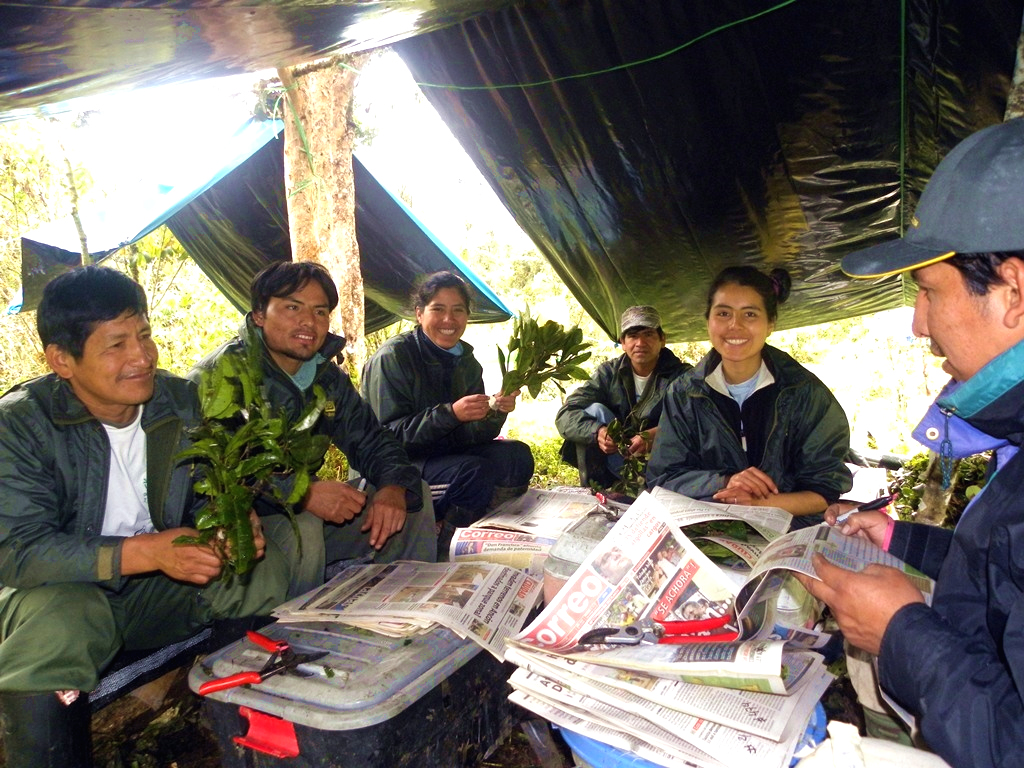
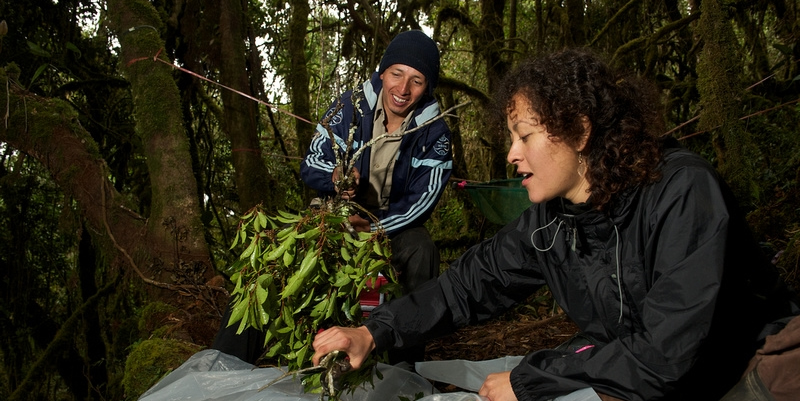
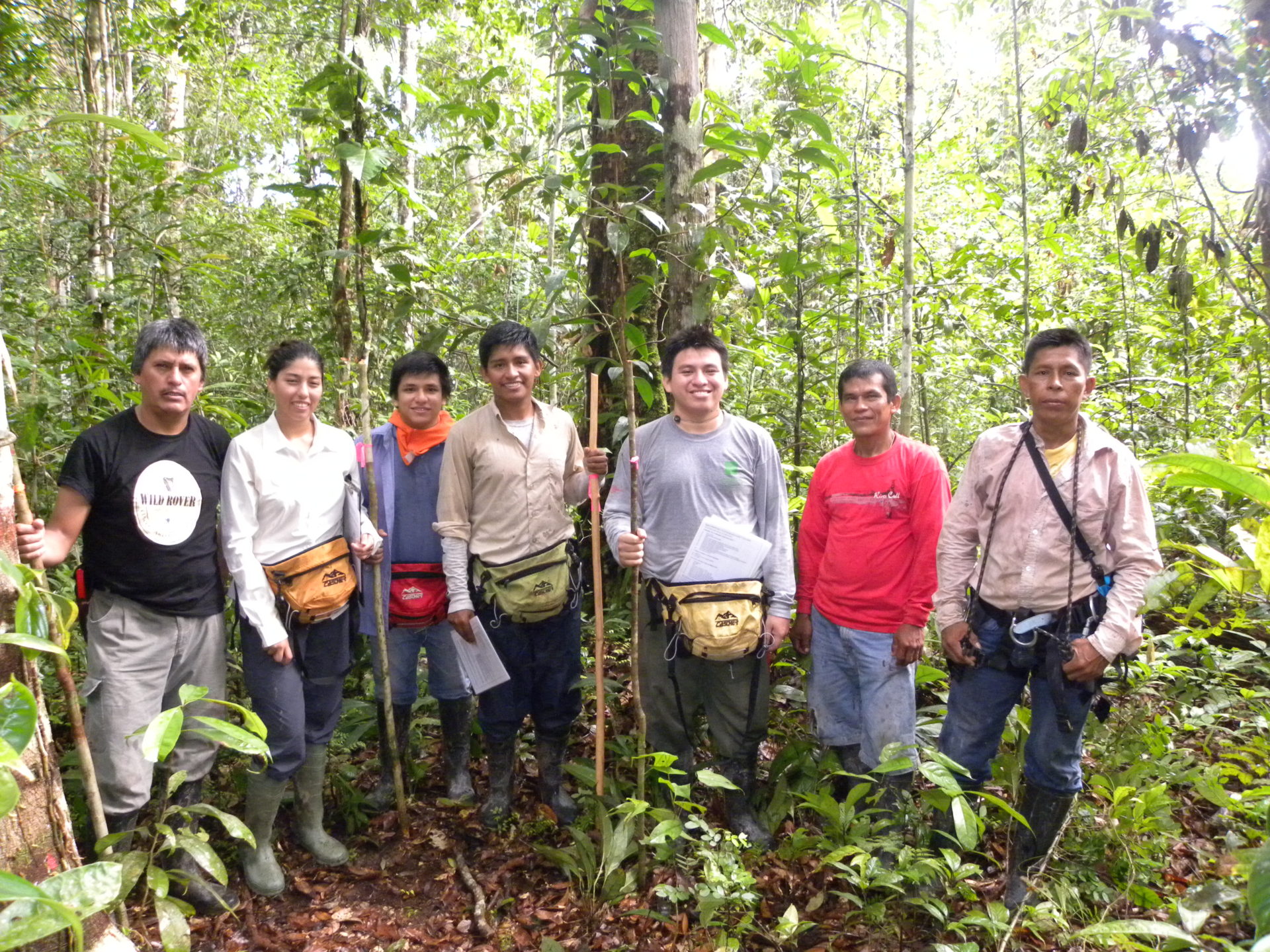
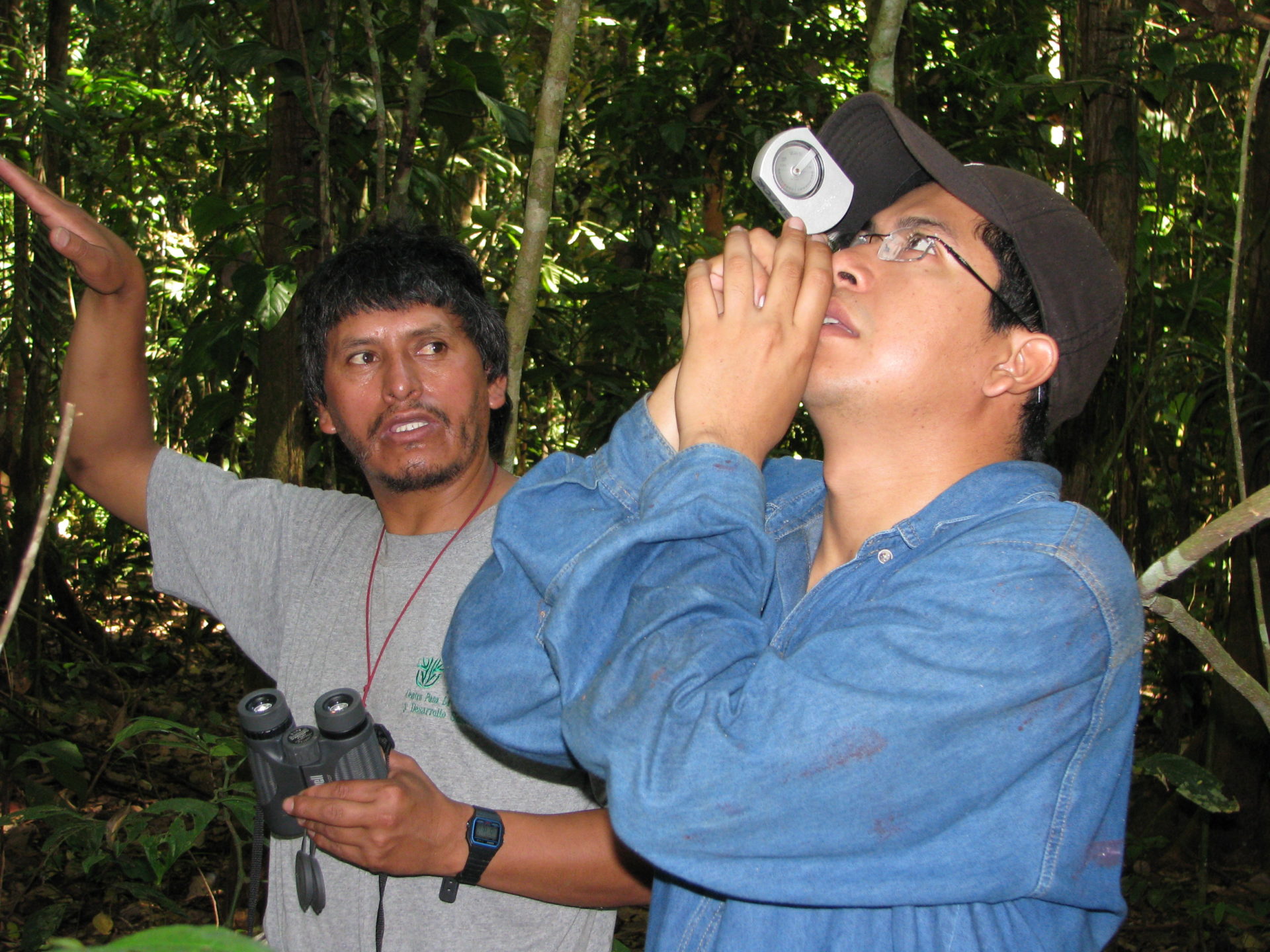
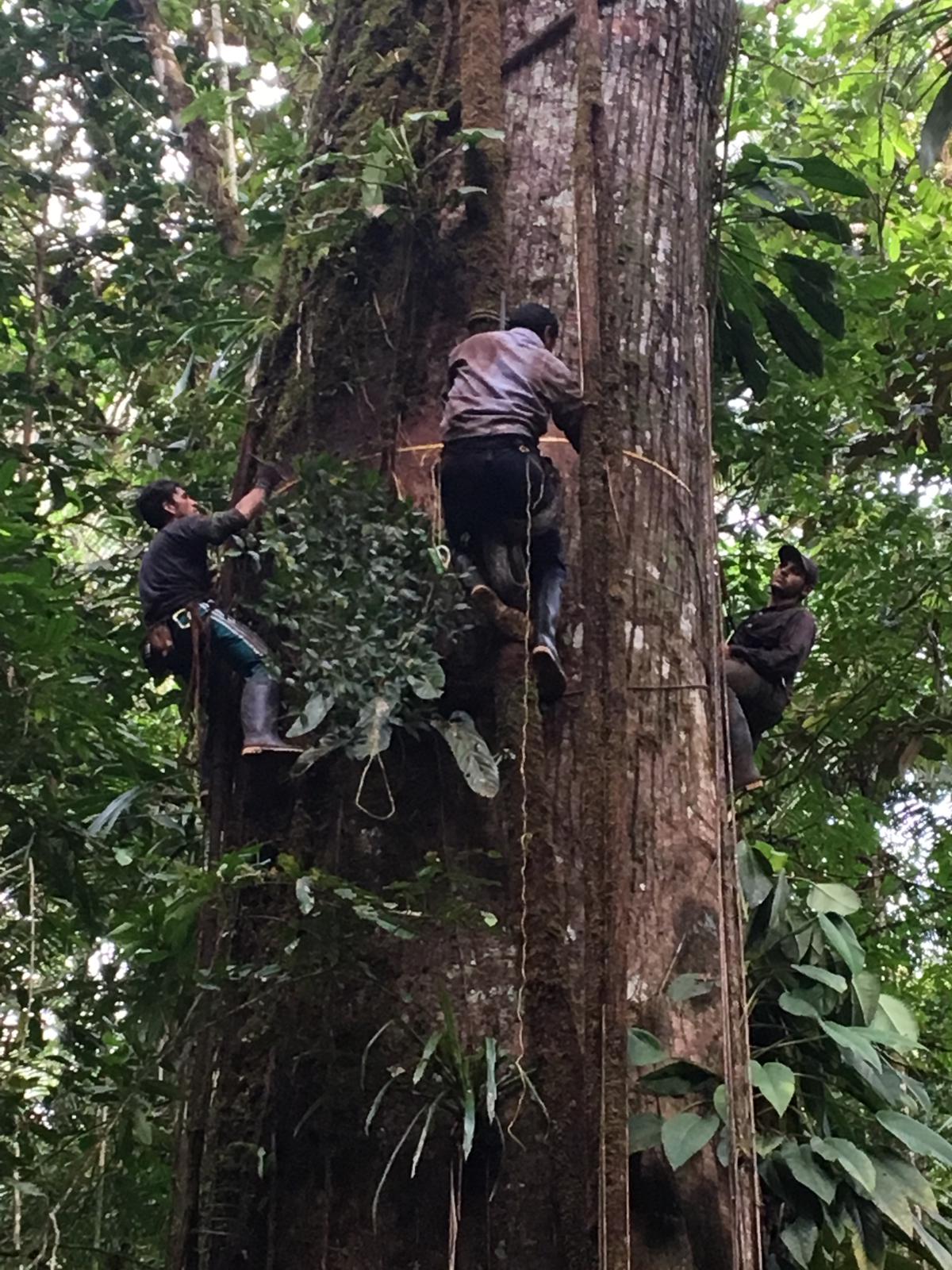
The recent RAINFOR permanent plots remeasurement campaign took place between the months of August and September 2011. For about seven weeks a team formed by Abel Monteagudo, Victor Chama, Nadir Pallqui, Amador Pfuro, Ítalo Treviño, Yuri Huillca and Antonio Peña, firstly travelled from the city of Puerto Maldonado, via the Tambopata River, settling in the Explorer's Inn, in the Tambopata National Reserve. They proceeded to remeasure 8 permanent plots in different forest types, and besides recording diameter measurements they also recorded, for each living individual, additional information relating to the position of crown and liana infestation. The new permanent plot TAM-09 installed in 2010 was remeasured, and parallel to this the team also identified botanical specimens in the field, with the aid of binoculars, and proceeded to collect some samples for later identification. Close to the new plot is the recently completed Tower (43m high) which had lots of new equipment for measuring and monitoring gas fluxes, etc. Culminating this first part the team returned to the city of Puerto Maldonado for a short break. The team, now without Victor and Nadir, travelled by boat up the Madre de Dios River for about two hours to the casa ITA of the Inkaterra Ecological Reserve to remeasure 4 plots of 500m in length by 20 metres wide. In little more than a week the task was completed. In summary, the 12 permanent plots in the region of Madre de Dios were satisfactorily completed, including the collection of recruits which could not be identified in terms of species in the field. These collections are being dried for later identification, assembly and deposit in the herbarium of HOXA in the province of Oxapampa, in the Central Jungle of Peru and the Herbarium CUZ of the Universidad Nacional de San Antonio Abad del Cusco.
Ecuador - July - August 2011
After only one year, the RAINFOR team formed by Abel Monteagudo, Victor Chama, Antonio Peña (Peruvians), Julia Salvador, Roberto Raza, Noemí Muquis and Juan Pablo Santos (Ecuadorians) remeasured eight permanent plots in rainy tropical forests in Ecuador. In addition to remeasuring the 4 plots in the protected area of Jatun Sacha, these were also completely retagged. After completing this first phase the team moved to the city of Coca for a short break. From Coca the team went via foot and also crossed the Napo River to reach the Yasuni Research Station, to remeasure and retag the two 1 km long and 10 meters wide plots, with the collaboration of Bolivar Enemenga, native of the surrounding native communities. Then for two days we remeasured the permanent plot which was seasonally flooded (lowland). After this phase, the team moved to via boat to the Biodiversity Station of Tiputini to remeasure and retag the two plots there: one near the station which due to the increase of water levels in the Tiputini river caused by heavy rains was completely flooded, despite this situation the team was able to complete the remeasurement; the other plot located almost 40 minutes by foot, was remeasured without any problems. The eight Ecuadorian plots were successfully remeasured and retagged, and the few recruits collected from 2010 to 2011 were registered and recorded. It is worth mentioning that in this campaign two Ecuadorian colleagues were involved in the campaign from start to finish.
July - August 2011 - "Joint Amazon Carnegie RAINFOR Expedition" (JACARE) fieldwork in Peru, 2011, supported by the Moore Foundation
The months July to October saw the start of a major collaboration between RAINFOR and the Global Ecology Group at the Carnegie Institute, led by Greg Asner. The aim of the project (named JACARE, the Joint Amazon Carnegie RAINFOR Expedition) is to link forest canopy chemistry, physiology, composition and function with over flights of the Carnegie Airborne Observatory (CAO). The CAO collects lead-technology data on the structure and composition of the forest canopy using lidar and hyperspectral lasers, so that the chemistry and structure of individual canopy trees can be mapped. There is potential that within a few years we may be able to map tropical forest structure. Chemistry, composition and ecosystem function at landscape level. This may also allow detection and mapping of signals from drought, such as occurred in 2010. Coupled to over flights was a major field data collection conducted by Carnegie and RAINFOR teams over several RAINFOR sites in Peru, including Tambopata, Cusco Amazonico, the Andean transect and Allpahuayo, Jenaro Herrera and Sucusari, with a particular focus on RAINFOR intensive sites. Overall 1900 canopy trees were sampled for canopy chemistry and leaf and wood anatomy, and a large fraction of these were also sampled for leaf gas exchange properties. The exciting but challenging fieldwork lasted 85 days, and the vast dataset collected will require many more months and years of analysis and interpretation. Field work was supported and conducted by participants from UNSAAC (Cusco), PUCP (Lima), INPA (Manaus, Brazil), USP (Sao Paulo, Brazil), Carnegie (Stanford, USA), ANU (Canberra, Australia), JCU (Cairns, Australia) and the UK Universities of Oxford, Leeds and Edinburgh. The whole mission was supported by the Gordon and Betty Moore Foundation.
Bolivia - June - October 2011
A total of 21 plots were measured between June and October 2011 in various locations in Bolivia with support from the Moore-foundation. This grant was awarded to RAINFOR to monitor the impact of the 2010 drought on Amazon forest dynamics. This fieldwork kicked off in June 2011 with the remeasurements of a set of 10 plots in the Parque Noel Kempff Mercado in the east of Bolivia with a team of 7 people, led by Alejandro Murakami and Alexander Germaine and local support from Chiqui Arroyo. These plots are all located in or near the National Park but contain different forest types and are on different soils. They include a set of four plots on the spectacular 500m high Huanchaca plateau, which imposes a real physical challenge to the team as it can only be accessed by climbing up by foot with all the equipment. After this trip, Alejandro Murakami travelled to the far north of Bolivia in august where he worked together with students from the Universidad Autonoma de Beni (UAB) to remeasure four hectare of Permanent Sample Plot in the Reserva El Tigre. Following this work, two plots (Sacta) located at the foothills of the Andes in the district of Cochabamba were measured at the beginning of September with the help of Casimiro Mendoza (FOMABO, Manejo Forestal en las Tierras Tropicales de Bolivia). Towards the end of the same month a further 7 plots were recensused in the north-eastern part of Pando, close to the border with Brazil. These plots were set-up between 1999 and 2003 and managed by the Universidad Autonoma de Beni (UAB) and IBIF, in collaboration with the logging company MABET. This work was jointly led by Alexander Germaine and Guido Pardo (UAB) and the team further consisted mainly of students of the UAB. Roel Brienen travelled to the north of Bolivia to help this work getting started. He also spent some time in the region to collect some wood samples for a tree ring study on Cedrela and some other species. The aim of this study is to generate important insights into long-term growth and physiological responses of a selection of Amazon tree species to climate change and atmospheric CO2-concentrations. These data on the dynamics of this set of Bolivian plots will give important insight into the responses of the tropical forest to the 2010 drought event, which occurred just 5 years after the 2005 drought.
Acre (Brazil) - June 2011
Ted Feldpausch, in collaboration with Marcos Silveira and Jorcely Barrosa and students Giordano Bruno da Silva Oliveira and Daise Moura de Freitas from the Univ Federal de Acre (Cruzeiro do Sul campus) led a field expedition to the Alto Jurua to recensus RAINFOR plots to evaluate the 2010 drought. Ted, Jorcely and UFAC students had previously measured the plots in 2009. Following the recensus in the Alto Jurua, Ted, Marcos, Carlos Quesada, Flavia Costa, Cleber Salimon and Chris Doughty led a RAINFOR-sponsored workshop in Rio Branco. After the workshop, Ted and a group of workshop student participants, including Wendeson Castro, Alejandro Araujo Murakami and Alexander Parada, and parataxonomist Edilson Consuelo led the recensus of plots in eastern and south-eastern Acre Brasil. This was a first step under the new RAINFOR-Moore ‘urgency’ grant and NERC-funded ‘urgency’ grant to determine how trees respond to drought, especially the 2010 ‘drought of the century,’ the second major Amazonian drought in only five years. These results will be combined with work with other collaborators at focal field sites to evaluate tree response across Amazonia.
Peru - May 2010 - October 2011
A two year field campaign is being conducted in Madre de Dios, Peru, to improve biomass estimates in different forest types in this area. The team, lead by Rosa Goodman and Tim Baker, works in a logging concession near Iñapari and on RAINFOR plots in the Tambopata National Reserve. The first part of this campaign is to weigh trees in the open, bamboo-dominated forests, which is an important forest type where no other directly-measured biomass data exists. Similarly, they will measure and weigh common palm species. These datasets will be used to create new allometric equations to predict carbon storage in trees and palms in this region. Thirdly, they will conduct inventories in the open, bamboo-forest on the logging concession and secondary forests outside the Tambopata National Reserve to estimate total biomass in these forest types. Finally, these and existing ground-based biomass estimates will be used to calibrate remote sensing data over a 13,875 ha area in Tambopata. As of October 2011, the team has weighed 52 trees and 95 palms in Madre Dios, Peru, as part of a two-year field campaign to improve biomass estimates in this region.
Bolivia - February - March 2011
With funding from a NERC Urgency Grant to the University of Leeds a team of 9 people led by Alejandro Murakami (Museo de Historia Natural de Parque Noel Kempff, Bolivia) and Yoko Ishida (INPA, Brazil) started a recensus to include about 10 permanent sample plots in Bolivia. With trip logistics having been organised by Ted Feldpausch (Leeds) and Chiqui Arrayo (Museo de Historia Natural de Parque Noel Kempff, Bolivia) recensus and leaf/ wood sampling were undertaken for permanent sample plots in seasonally dry forest (Chiquitano) and savanna, first for three plots at “Ottavio” (near San Ignacio de Velasco) and then a further three plots at Tucavaca (near San Jose de Chiquitos). Travelling down from the UK with 30 kg of field gear and joining the team for the first few days at Ottavio was Jon Lloyd (University of Leeds & James Cook University, Australia). Despite the area around Ottavio having been subject to a severe drought in 2010, there were few (if any) obvious indications that the forests and/or savannas of the region has suffered. Disappointment followed, however, when the team moved north to resample the transitional forest at the Acuario site (about 100 km south of Parque National Noel Kempff) which, after 1½ hard days travelled was found to have almost been completely destroyed by settlers expanding out from nearby settlements. Measurements were, however, made on what trees remained. In April the Bolivian team members will return to Noel Kempff to recensus forest and savanna plots. This was the first of two recensus campaigns planned under the NERC Urgency Grant. In March/April a team led by Beatriz Marimon, Ben Hur Marimon, Ricardo Umetsu (Univ. Estadual de Mato Grosso) and Yoko Ishida will resample the Nova Xavantina region of Mato Grosso, Brazil to coincide with previous RAINFOR/TROBIT census. In all sites in Bolivia and Mato Grosso team members are trained in plant trait/physiological measurements of trees to evaluate the potential role of physiological adaptations to drought. This "urgency" research will provide insight into how forest composition and structure may change due to physiological tree traits selected for by drought, an important first step to determine long-term impacts of potential increasing drought frequency in transitional Amazonian forest and savanna.
 |
|
|
Mato Grosso, Brazil - November 2010
In November 2009, two permanent plots, of one hectare each, were tagged and measured in the Amazon rainforest, in the research area of the Fazenda Tanguro, northeast of the state of Mato Grosso, Brazil. The team was composed of the following Professors from UNEMAT, Nova Xavantina, Beatriz Schwantes Marimon, Ben Hur Marimon Junior and Eddie Lenza and Master's students in ecology and conservation at UNEMAT, Edmar Almeida de Oliveira, Claudinei dos Santos, Leandro Maracahipes and Paulo Morandi. These forests are located in the transition zone between the ‘cerrado’ (Brazilian savannah) and Amazon forests, on acid soils which are poor in nutrients. In November 2010, the same team established and measured another one acre plot in Ribeirão Castanheira, also in the northeast of Mato Grosso. The Amazonia-Cerrado transition zone coincides with the boundary between high Amazon rainfall (> 2000 mm per year) and average rainfall levels of the ‘cerrado’ biome (<1700 mm per year). This type of forest is marked by the probable natural expansion of the forest into the ‘cerrado’, and characterized by its high dynamic-forests, high biodiversity and high risk of deforestation. Like the Brazilian savannah, these transitional tropical forests face prolonged annual dry seasons between April and September. During this period leaf litter fall increases markedly, forming a thick layer of litter on the forest floor, which is absorbed by a dense network of shallow roots which prevents the nutrients to escape from the forest. The Tanguro Fazenda and Ribeirão Cascalheira are located in the "arc of deforestation" or the "Brazilian agricultural frontier", an area of billionaire agribusinesses, with highly mechanized agriculture, where some of the largest soybean producers in the world reach high productivity due to the favourable climate. Mato Grosso is the largest producer of soybeans, cotton and beef in Brazil.
 |
|
|
Bolivia - October - November 2010
During October 2010, RAINFOR and the Instituto Boliviano de Investigacion Forestal (IBIF, Santa Cruz), worked for 3 weeks together in the forest concession of La Chonta. The teams consisting of Roel Brienen, Abel Monteagudo, Joey Talbot, Antonio Pena, and Victor Chama (RAINFOR) and Alfredo Alarcon, Yuri Bustamante and Alexander (IBIF) completed the remeasurements of one of the forest experiments within La Chonta, consisting of more than 100 hectare of permanent sample plots. For a few plots (4 hectare) RAINFOR standards were applied, lianas included and botanical collections were made to improve species identifications. La Chonta is located in the transitional “Chiquitano-Amazon” forests in the department of Santa Cruz near Guarayos. This region was especially hard hit by the new drought that developed over the southern Amazon this year. Temperatures within the forest were extremely high and a thick blanket of smoke from surrounding fires penetrated the forest. After completing this work, the RAINFOR team led by Abel Monteagudo, moved to the north of Bolivia where they set out to remeasure another set of plots in the forest concession of MABET in the north-eastern part of the department of Pando. These plots were installed by IBIF or others between 1999 and 2003. Vincent Vos and students Yasmar Chao and Gilberto Suarez from the UAB (Universidad Autónoma del Beni) joined the team and with additional help from MABET (Nelson Cuata and Gregorio Aguada), 7 plots were remeasured according to RAINFOR standards. During this trip over 1500 botanical collections were made, which will significantly improve the floristic knowledge of this region.
 |
|
|
Ecuador - June - August 2010
A seven weeks’ field campaign was conducted between the end of June and beginning of August to remeasure eight permanent sample plots in the wet lowland rainforest of Ecuador. A team, consisting of Roel Brienen, Abel Monteagudo, Antonio Peña-Cruz, Euridice Honorio and 4 Ecuadorian students first set off to remeasure 4 plots within the protected area of Jatun Sacha. These plots are located on the Andean foothills and have very fertile soils. These are one of the most dynamic forests within the RAINFOR network. After finishing remeasurements and botanical collections of the Jatun Sacha plots, Roel and Euridice returned to Quito, while the others moved to the protected reserve of Yasuni. Here, the team remeasured two of the longest plots of the RAINFOR network; the Bogi transects which are 1 km long strips of 10 meter wide. They also successfully located a floodplain plot which was installed in 1997 by Nigel Pitman on the bank of the River Tiputini, and will now be added to the RAINFOR database. Finally, the team proceeded to the Tiputini biological station where two more plots were remeasured. The Ecuadorian forests are amongst the most diverse on earth with an average of ca. 240 species per hectare. Overall, the campaign has been a great success with nearly 5.000 recordings of tree diameters, mortality and recruitment, and over 1100 botanical specimens collected.
Peru - May - July 2010
In May/July 2010, Beto Quesada and Erick Oblitas led a somewhat “epic” journey to collect soil samples in more than 20 permanent plots across Peru. In early May Erick and his team started the trip in Iquitos doing intensive soil sampling at the Alpahuayo Mishana Reserve. After the completion of the work there, Erick and Roger Campos, a local forestry technician, went to Cusco where Beto Quesada joined the team. The aim of the trip was then to sample soils across an altitudinal transect extending from the Andes to the Amazon. Two large teams were formed with Erick and Beto splitting to cover a larger area. Beto Quesada led a field team for intensive soil sampling with the help from the local biology students Carlos Quispe, Alexandro Cusihuallpa, Antonio Quintano and Carlitos, all from the University San Antonio Abad del Cusco. This team went to the Wayqecha Field station were 800 soil samples were collected at >3000m altitude. (read more about the trip here)
 |
|
|
Guyana - February - April 2010
Roel Brienen and Abel Monteagudo led a two month field trip to the interior of Guyana to remeasure a total of 12 permanent sample plots in Mabura Hill, Pibiri and Iwokrama. The diverse team consisting of Dutch, Surinamese, Peruvian, Brazilian and Guyanese participants started their work at Mabura Hill and Pibiri, where they remeasured plots that were originally installed by Tropenbos-Guyana back in 1993, and are now managed by the Guyana Forestry Commission (GFC). After a week, Eric Mendoza and Samuel Almeida Jr. arrived from Brazil and joined the team to do the first (standard) RAINFOR soil sampling for these plots. As the plots are located on the old Guyana shield, their soils are among the poorest in the Amazon basin, and they have very low growth rates and are of low dynamism. They are a valuable addition to the RAINFOR network and will constitute a nice contrast with plots in the western Amazon on much richer soils. After one month, the team moved to the Iwokrama forest reserve 80 km south of Mabura. This unique forest area is managed by Iwokrama International Centre for Rainforest Conservation and Development (IIC) and combines sustainable forestry, tourism and conservation. The team successfully relocated two permanent sample plots installed in 1999 and incorporated a further four plots, which are part of the Iwokrama forestry experiment. In these plots, the team complemented existing measurements with trees in the smaller size classes from 10-20 cm. During this campaign the team collected botanical samples of more than 700 trees and lianas, which will be deposited at Herbaria in Guyana and Peru (Oxapampa) for further identification.
Colombia - January 2010 onwards
The new RAINFOR collaboration with the Jardín Botánico de Medellín kicked off in January, with Esteban Alvarez, Alvaro Cogollo, Oliver Phillips and other Colombian investigators and students. We visited the montane forest fragment at San Sebastian near Medellín where a permanent plot was established in 2003. After reviewing RAINFOR field and database protocols, the JBM team moved on to lowland forest in the Magdalena valley. Over the coming months, the team will recensus permanent plots across Colombia, including Amazon, Andean, Choco and Caribbean forests.
 |
|
|
Pará, Caxiuaña, Brazil - November 2009
A fieldtrip to Caxiuanã’s National Forest was led by Samuel Soares de Almeida, an ecologist at the Goeldi Museum, Brazil, with the participation of biologist Antonio Sérgio Lima da Silva and 6 other people, This trip was carried out to remeasure 6 plots of 1 hectare each. Access to Caxiuanã has to be gained by motor boat. The journey from Belém to Caxiuanã is 22 hours. The Caxiuanã forest type is tropical, humid and always green, with high biomass and diversity. The oldest plots were established in 2001 (Caxiuanã 1 and 2) and the others from 2003 (2 Esecaflor and 2 Parama). In the census, data about new diameters, mortality and recruitment of new plants was recorded. Maintenance activities were also carried out, such as: replacement of labels, marking of tree-trunks with paint and replacement of some pickets. The fieldtrip also included the participation of soil ecologist, Beto Quesada, who carried out intensive soil analysis, in 2m deep profiles, within the plots, following the protocol already used elsewhere, to estimate the amount of carbon in the soil. The campaign was successful with the remediation and recording of mortality and recruitment of about 3.000 plants. Botanical samples were collected for identification at the Herbarium in the Goeldi Museum.
Oxapampa, Pasco, Peru - September - October 2009
During a 7 week trip, Abel Monteagudo (Jardín Botánico de Missouri, Peru - RAINFOR) led a team of six Peruvians to remeasure 7 plots in the central jungle of Peru, through an altitudinal gradient. Firstly, they travelled from Oxapampa-Pasco (at 1800 masl) to visit the lowlands in Yanachaga Chemillen National Park, in the vicinity of the Paujil Biological Station. It was necessary to set up a camp for accessibility and the 5 RAINFOR plots with altitudes of between 400 and 900 masl were remeasured. The team then returned to Oxapampa with some problems along the way due to road blockages and occupation of the roads by the local indigenous people, for a brief rest and to prepare for the next remeasurement of the Yanachaga plot, located at 3200 masl, the highest in the central jungle of Peru. Similarly, a camp was set up in the vicinity of the plot, and after another break, they prepared for the last field trip to remeasure the Oso-Playa plot at 2400 masl and the farthest away, located to the north of the National Park. Once they had set up camp they had to walk for almost two hours through a very rugged trail to reach this plot and it took another two hours to return back to camp. After several days of alternating field work with collection of the flora of the study area, they were able to complete the remeasurement. At the same time as remeasuring the 5 plots in the lower jungle, the very hard work of digging a soil sampling pit in each plot was carried out, and this sampling work was led by Erick Oblitas (INPA, Brazil - RAINFOR). Following the field work during October and November, the botanical specimens collected from the recruits were identified and deposited at the Herbarium (HOXA). The data will soon be publicly available in the Forest Plots database.
Acre, Brazil - June - August 2009
Ted Feldpausch and Beto Quesada led a two month field expedition in Acre, Brazil together with RAINFOR-Moore collaborators Marcos Silveira, Jorcely Barroso, Erick Mendoza and Edilson Consuelo to recensus forest plots established in 1995. The research was carried out in the Alto Jurua region in the remote Brazilian-Peruvian frontier and in the Chico Mendes Extractive Reserve on the border with Bolivia. The first phase conducted by Ted, Jorcely, Edilson and two students from the Federal Univ of Acre-Cruzeiro do Sul campus (UFAC), required travel by canoe for many days to gain access to forest plots last visited in 1995 and 2003. The second phase by Ted, Beto, Erick, Edilson and two students from the UFAC-Rio Branco campus in the RESEX Chico Mendes included the first intensive soil sampling under the RAINFOR-Moore project by Beto to establish baseline soil stocks for the Amazon Basin. Soil sampling included 50 2 metre deep soil profiles per plot; this soil work will be replicated across the basin. These plots represent a unique forest composition, bamboo-dominated forest, for the RAINFOR network.